
16-DAY IMMERSION · BALI
Embodied Mahavidya Immersion
A 16-Day Classical Tantra & Goddess Retreat in Bali
Bhakti, Yoga, Meditation & the Dasha Mahavidya — the Ten Wisdom Goddesses
Sixteen days with the Ten Wisdom Goddesses.
You will chant until chanting stops being chanting. You will dance a goddess rather than read about her. You will perform the fire ceremony yourself, in the traditional form, build the yantra, and carry a mantra given properly. You will meet goddesses who are delicious and goddesses who frighten you, and you do not get to choose the order they come in. Some days are juicy. Some take you apart.
For sixteen days you are the practitioner, not the audience.
What this actually is
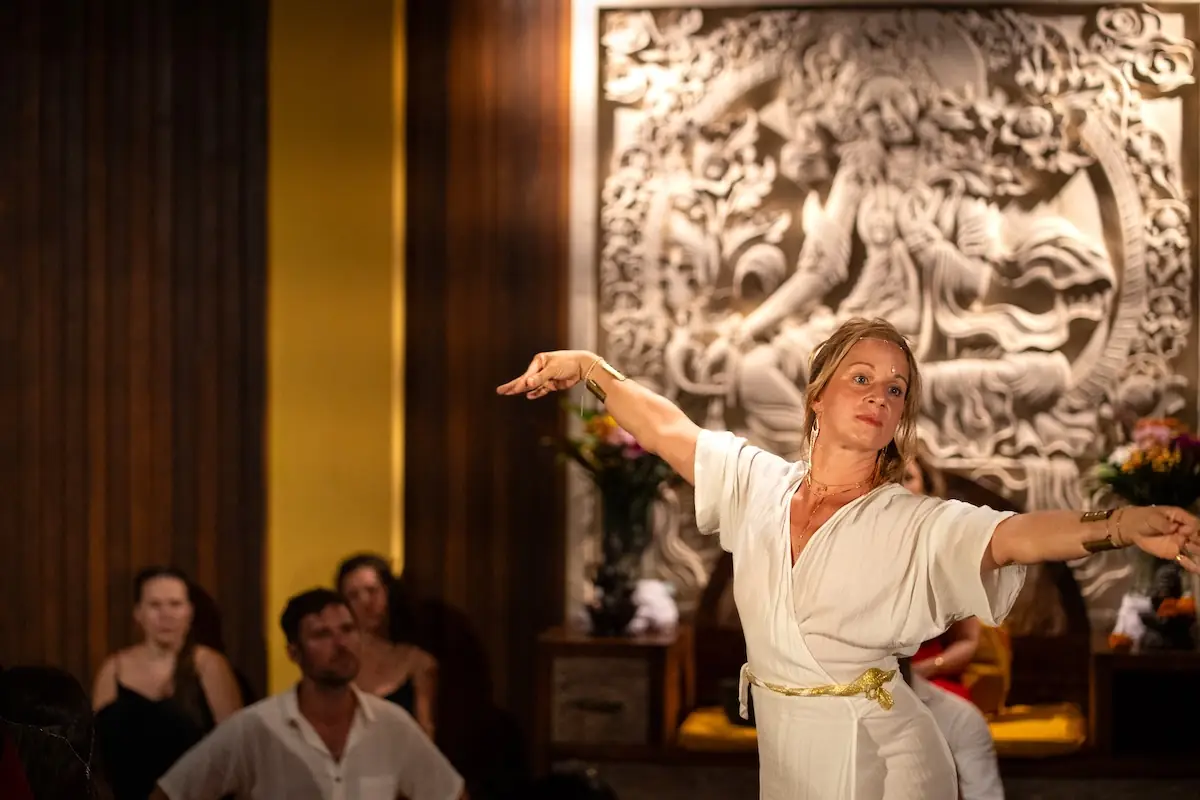
Sixteen days of practice with the Dasha Mahavidya — the Ten Wisdom Goddesses of classical Tantra. One goddess at a time, met through mantra, ritual, dance, devotional singing, contemplation, and living alongside other people doing the same thing.
These are not intellectual frameworks. They are traditional Tantric methods, brought into a form you can actually digest, and then practised — daily, in your body, for two weeks.
The one thing this asks of you: be interested in the tools. If you are curious about mantra, ritual, chanting and movement, this is a rare place to use them properly. Curiosity is enough — nobody arrives already knowing how to do any of this.
The arc
Arrival & opening
Five Mahavidyas
A day out in Bali
Five Mahavidyas
A rest day
The Goddess Festival & Mahavidya Puja
One goddess a day across the ten teaching days, in the sequence the lineage uses. Sixteen days, fifteen nights: arriving on a Saturday, leaving on a Sunday, with a clear day before the Puja so that nobody walks into the biggest day of the retreat exhausted.
And it starts three weeks before you land.
Why this is rare
- The practice. For this kind of work you need teachers who have received the mantras and the methods through a living lineage, and guides who know the rules of yantra, fire ceremony and sadhana from doing them rather than from reading about them. That combination is not easy to find anywhere, and it is why this is sixteen days rather than a weekend.
- The dance. Classical Indian dance for the goddesses — the forms, and the mudras belonging to each of the Ten Wisdom Goddesses — is taught almost nowhere outside the tradition. Most people who work with the Mahavidyas will never learn a single one of their mudras. Here you learn them with your hands, over two weeks, from a dancer trained in both Bharatanatyam and Tandava who has spent her life inside a living Tantric lineage in India, and who does not treat the dance as performance. Women and men both dance, each in the form the tradition gives them.
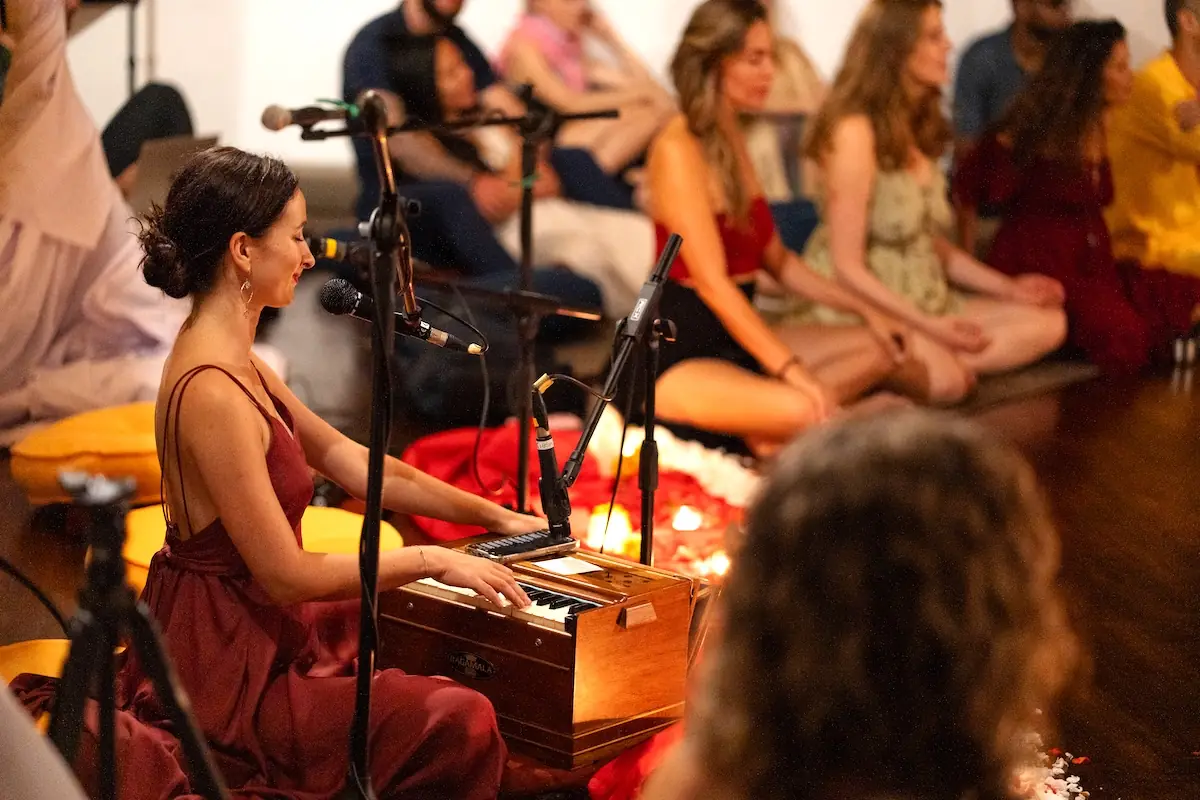
- The chanting. Bhajan and kirtan led by someone who practises these archetypes and carries the transmission. He did not pick up the repertoire and learn to sing it well. You hear the difference by the third evening.
- And the translation. Taking something this esoteric and making it usable in an ordinary week — so you can find the magical inside the daily, at home, long after Bali. That is as rare as the rest of it.
Who this is for
Someone who wants a full-blown experience for two weeks rather than a taste of one.
You may have twenty years of practice behind you, or you may have met one of these goddesses somewhere and found you could not leave her alone. Both are the right place to begin. No prior study of the Dasha Mahavidya is needed.
Open to everyone. The Dasha Mahavidya are the full range of what is alive — creation, destruction, beauty, decay, fierceness, devotion, liberation, and more. That range does not belong to one gender.
Let me be very transparent about something. I'm Black, I'm a woman, I'm from the United States. This is not a tradition or a body of work that is usually associated with someone like me. This is something I had to come to Bali to find out about — and that is a damn shame. There is so much gold to be mined in doing a practice like this.
Couples
One thing that has stood out across previous Mahavidya pujas and immersions is the effect on a couple's path. Participants say it again and again: the practice moves into the relationship, both people end up with language for what the other is going through, and things that were easy to step around become difficult to avoid.
If you have someone to bring, bring them. You can do the twenty-one days of preparation together, and the couples rate is built to make saying yes together the obvious choice.
What you will practise
- Classical Tantric sadhana. Mantra, given properly and practised daily. Yantra — sacred geometry, built and used rather than admired. Yajña, the fire ceremonies. Kriya and vocal kriya, to clear what is in the way.
- Dance. The way to meet an energy through the body, in traditional form rather than free movement. Two classical sources: Bharatanatyam, the classical dance of South India, and Tandava, the dance of Shiva. Traditionally women work from the first and men from the second — and yes, men dance here. Along with the mudras belonging to each goddess.
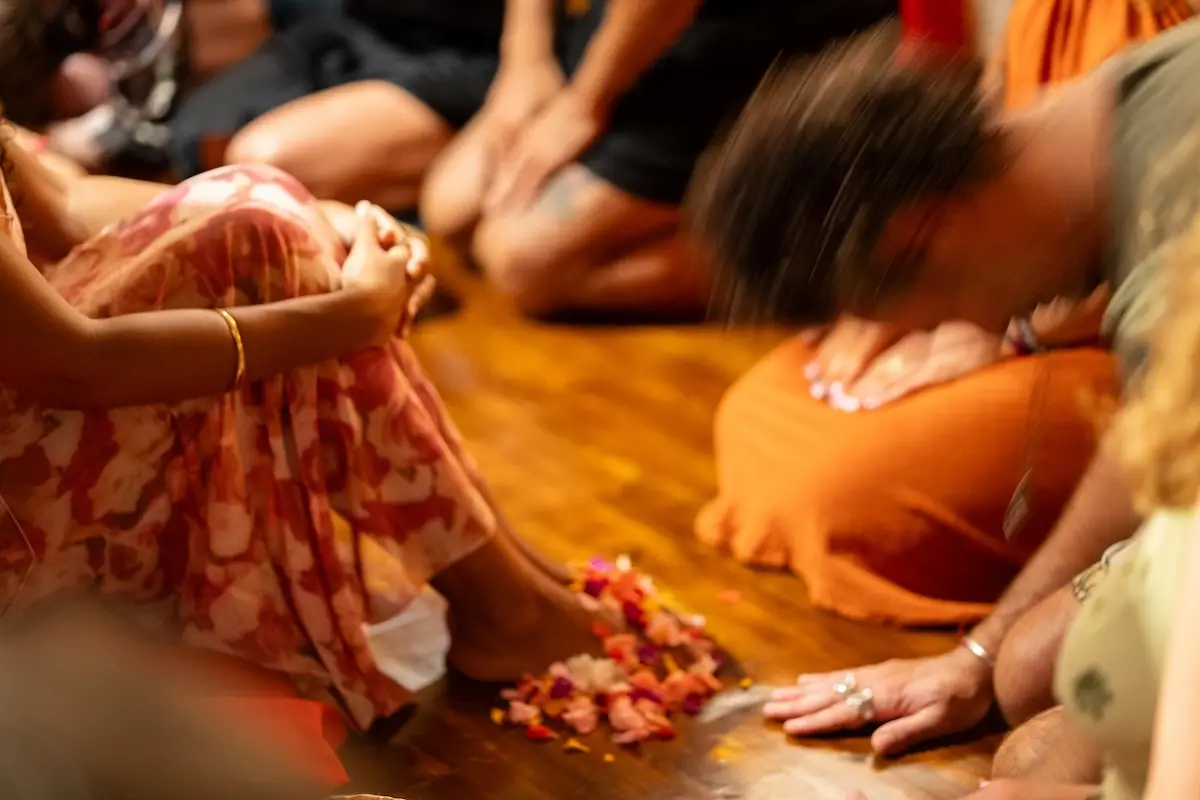
- Bhajan and kirtan. Devotional singing here is a practice rather than entertainment. Led by someone who lives it, it aims at an altered state — no guarantees, because that part depends on you. Each goddess has her own dedicated bhajan and kirtan, so across the sixteen days you move through all ten by voice. The final Mahakirtan, at the festival, opens to people from outside the group.
- Closing the divide. Strong spiritual practice often opens a gap: the sadhana on one side, your actual life on the other, and a quiet sense that the two do not belong to each other. Closing that gap is the work here. Altars, symbolism, and learning to recognise these goddesses in the middle of an ordinary day — at your desk, in a difficult conversation, in whatever mood you woke up in. The mantras you receive stay with you and keep working long after the sixteen days are over.
Twenty-one days before Bali
Three weeks before we gather, you receive one of the Ten Wisdom Goddesses to carry.
You study her through the online platform, and you practise a daily tapas with her — forty-five minutes of committed daily practice — alone, or alongside your partner if you are coming as a couple. Twenty-one days of that, and you arrive already in relationship with her rather than reading about her on the plane.
She stays with you through the sixteen days, and on the final day she is the one you embody.
Registration closes 20 June 2027, because that is when the tapas begins. Late registration is not possible.
The Goddess Festival
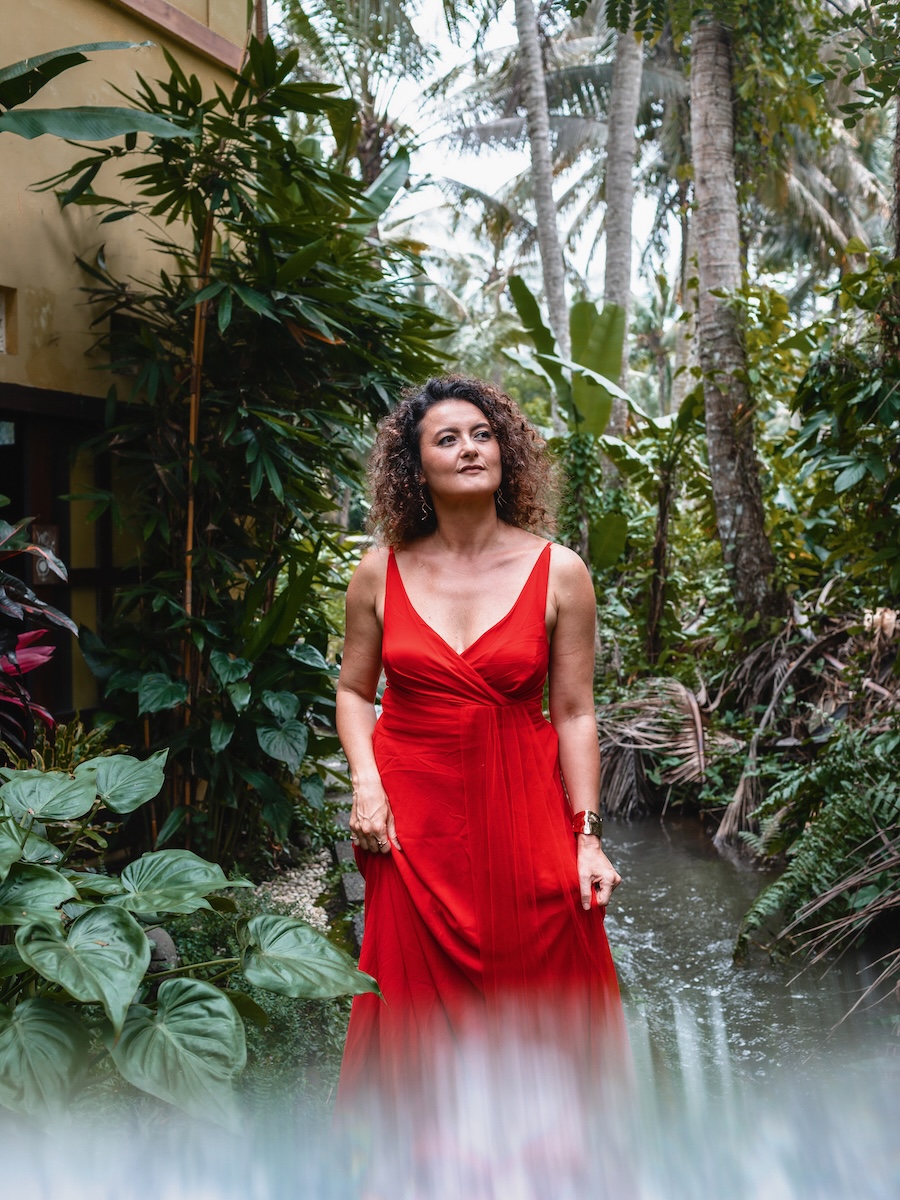
The last day is the culmination, and everything from the two weeks comes into it.
The Maze of the Goddesses. We build a space where each goddess has her own corner and her own altar, and you make something for yours — a game, a short practice, a small exercise. A playful way of sharing what you have practised, with the other participants and with the guests who come. In our experience the maze stays with people for years afterwards: the ones who made it as much as the ones who walked through it.
Then the Mahabhajan and kirtan, and the Mahavidya Puja — a veneration of the Goddess, with each participant embodying the aspect they have carried since before Bali.
This is what the preparation is for. You cannot walk into that day cold, and by the time it arrives you will have been getting ready for five weeks.
Practitioners from our wider circles join us, by invitation. The sharing is part of the practice rather than an addition to it. Abhinavagupta taught that in genuine aesthetic experience the personal dissolves: the one who offers and the one who receives arrive in the same state, no longer separate people having private feelings, and the heart becomes like a spotless mirror. That is what the final day is for.
THE TEN WISDOM GODDESSES
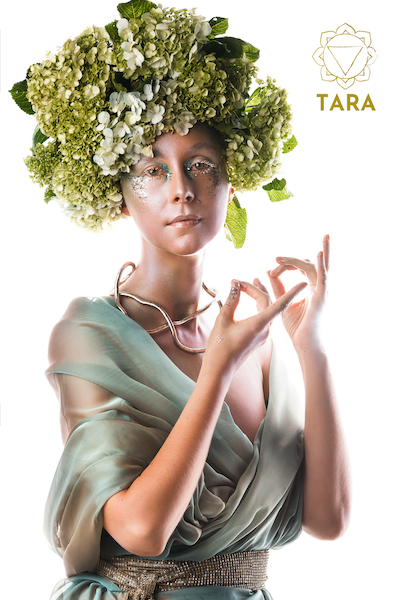
Kali. Tara. Tripura Sundari. Bhuvaneshvari. Chinnamasta. Tripura Bhairavi. Dhumavati. Bagalamukhi. Matangi. Kamalatmika.

Kali
Tara
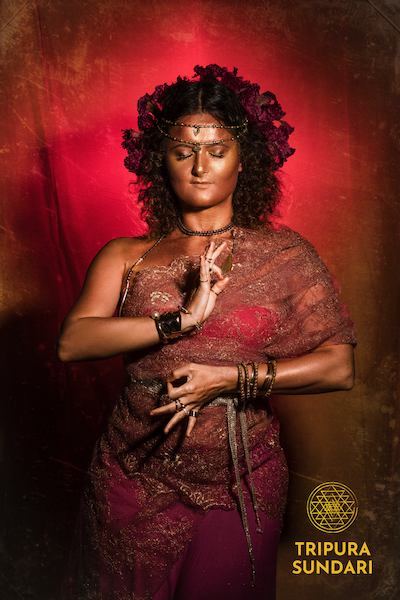
Tripura Sundari
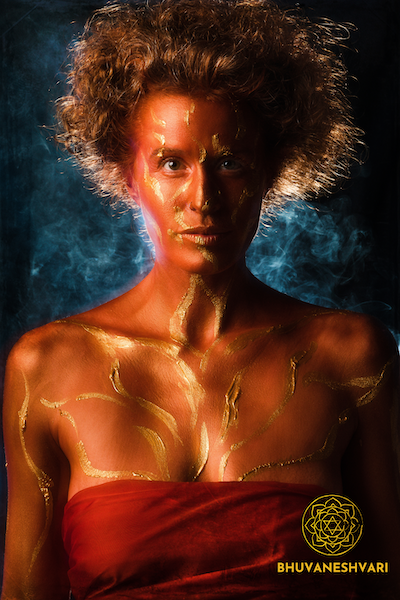
Bhuvaneshvari

Chinnamasta
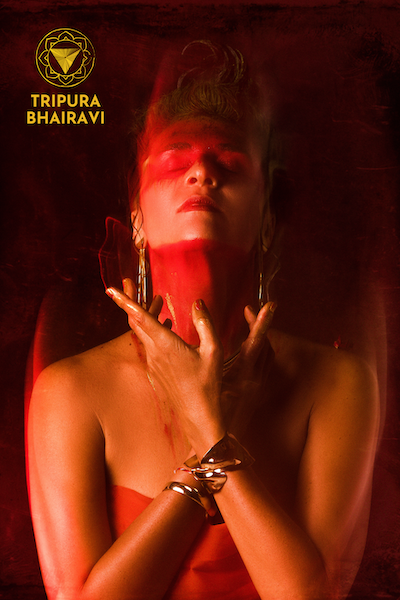
Tripura Bhairavi
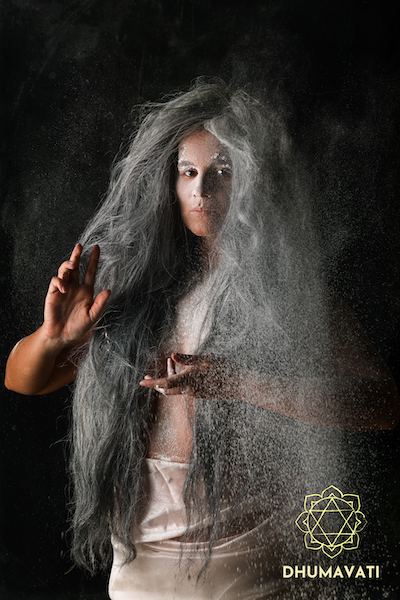
Dhumavati
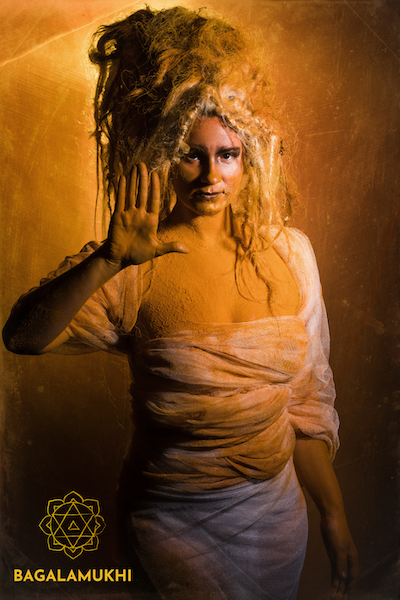
Bagalamukhi
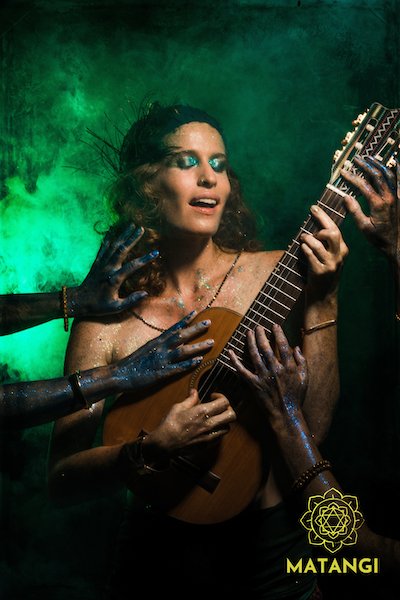
Matangi

Kamalatmika
Who is teaching
Everyone teaching here has practised within the same tradition, done the same sadhanas, and knows one another's work from the inside. That is unusual, and you will feel it: the streams meet rather than sit politely side by side.
- The lineage. The traditional teachings, ritual, mudra and dance come from a teacher with more than two decades inside a living Tantric lineage in India, raised from childhood among mantra and ritual and initiated into the Mahavidya path as a young woman. She is a classical Indian dancer in both of the forms taught here. Much of what she carries has never been translated into English, and very little of it is taught outside the lineage at all.
- The method. The Mahavidya sessions, the Goddess Method, and the arc holding the sixteen days together come from a teacher of more than fifteen years, who received the transmission of the Ten Wisdom Goddesses within that same lineage and has built this body of work across years of teaching. Her work is translation: making something this esoteric usable in a contemporary life.
- The devotion. Bhajan and kirtan are led by a practitioner of a classical devotional tradition of India, who has spent years leading kirtan immersions and coordinating devotional practice within an established school. His premise: in fire there is heat and light, and in the names of God there is purification as well as ecstasy.
- The daily practice. Yoga, meditation and ritual support come from a teacher with fifteen years of practice and more than twenty years of facilitation, trained in classical Tantra within the same lineage that carries these teachings.
Ubud
We gather in Ubud, inland from the coast among rice terraces and river valleys. It has been the spiritual and artistic centre of Bali for a very long time — temples and daily ceremony, music, dance, carving, and a long habit of receiving people who come to practise something.
It is the right place for this. The island keeps its own ritual life running all around you for the whole sixteen days, which does something to the two weeks that no venue could arrange on its own.

Voices from the work
Many people have a very woo-woo opinion when we're talking about energies, especially goddesses. But this is a very down-to-earth, grounded approach. You can go very deep into the mysticism — but for people who just want to understand different archetypes, it serves that purpose too.
If you ask me now how do I feel, I say I'm good — and it's not a lie.
Six months in, working with Bagalamukhi, she left the job she had been dreading.
There's a slowness, a grace, a compassion for myself and for others that wasn't there before.
It's grounded in so much tradition. It's not just, like, I channeled this goddess — which you see a lot of people do. And there's a kind of safety in that. You can trust that you're being guided on a valid path, and guided very expertly.
Investment
Super Early Bird
Until 11 January 2027
$1,333
$2,111 for a couple
Early Bird
Until 11 April 2027
$1,777
$2,777 for a couple
Standard
From 12 April 2027
$1,999
$3,111 for a couple
Included: the sixteen days, your twenty-one days of preparation, your Goddess's module on the teaching platform, all teaching and practice, ritual materials, the Goddess Festival, and 100 hours of YACEP continuing-education credit.
Add-ons
Meal plan — $511 for the full stay
Three meals a day, plus dinner on arrival. Two off days are excluded. Strongly recommended. The days are full, the breaks are short, and going off the property to eat is not realistic.
Accommodation — $555 to $2,655 for the fifteen nights, basic to luxury
Inquire according to your preference.
Airport transfer
Arranged on request.
Flights
Flights are your own.
Payment. Super Early Bird and Early Bird are paid in full at booking. At the Standard rate you may reserve with a deposit and pay the balance sixty days before arrival.
Cancellation. Until 11 January 2027 — six months out — you receive a full refund, deposit included. Until 11 April 2027 — three months out — you receive 50%. After that we cannot refund, but your place can be transferred to someone else up to 20 June. We ask everyone to take travel insurance.

Accreditation
Continuing education credit
The immersion carries 100 hours of YACEP continuing-education credit. If you are a registered yoga teacher, these hours count toward your continuing education and the training goes on your record as a credential.
If you are training with EMF: the immersion is optional, separately priced, and never required for your certification. These 100 hours sit on top of your 200.
FREQUENTLY ASKED QUESTIONS
Do I need experience with Tantra or the Mahavidyas?
Is this a women's retreat?
Can men join?
I'm non-binary. Where do I fit?
Is this a Tantra retreat in the sexual sense?
Can I use this for my yoga teaching credentials?
How demanding is it?
What does a day look like?
Yoga at 7:30, while it is still cool. Tea. An hour of sadhana before breakfast. The traditional teaching on the day’s goddess through the late morning and into the early afternoon — her symbolism, her practices, her movement. Yoga nidra, then lunch. In the late afternoon, the Goddess Method: what any of this means for a life outside a retreat. Bhajan and kirtan in the evening.
Fire ceremonies, kriyas and the dissolution of the yantra fall where the sadhana rules place them rather than where a timetable would.
Why does registration close 21 days early?
Where in Bali is it held?
What are the accommodation options?
Food and dietary requirements?
I can't sing.
Can I come with my partner?
What language is it in?
Do I have to attend all sixteen days?
What if I need to cancel?
About the tradition
For anyone who wants the background.
- Dasha Mahavidya
- the Ten Wisdom Goddesses — are a group of goddesses at the heart of Shakta Tantra: Kali, Tara, Tripura Sundari, Bhuvaneshvari, Chinnamasta, Tripura Bhairavi, Dhumavati, Bagalamukhi, Matangi and Kamalatmika. Each has her own mantra, yantra and sadhana, and together they cover the whole range of experience.
- Classical Tantra
- the practices as they are held in living lineage: mantra, yantra, ritual and sadhana.
- Sadhana
- structured personal practice, done daily over a sustained period.
- Yantra
- sacred geometry, the form of a deity, built and used in practice.
- Yajña
- fire ceremony, offerings made into flame.
- Bhajan and kirtan
- devotional chanting, call and response.
- Mahavidya Puja
- ceremonial veneration of the Ten Wisdom Goddesses, each embodied by a practitioner who has prepared for her.
Coming?
Sixteen days. One Goddess to carry. A festival at the end of it.
Questions before you decide — write to us. This is a small group and we would rather have the conversation.
Stay connected
Join the mailing list for insights, updates, and early access to new work.
Work that helps you move out of over-functioning and into a more grounded, clear, and embodied way of living.
ContactDijan is a brand operated by Inner Contemplation LLC, a limited liability company registered in Wyoming, USA.